

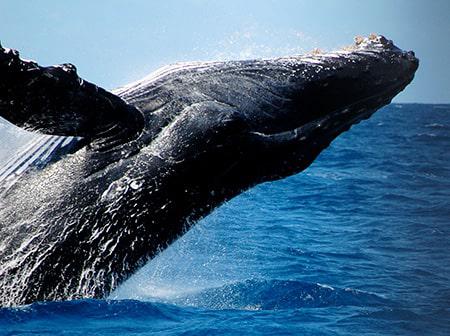
Each austral winter, Réunion Island welcomes migrating humpback whales that leave Antarctic feeding grounds for warm, calm waters to breed and calve. The whale season typically runs from June to October, with a peak in August–September.
Which species can you see?
-
Humpback whale (Megaptera novaeangliae) — the star of the season.
-
Occasionally: sperm whales, rorquals, and several dolphin species.
Why do whales come to Réunion?
After building fat reserves in colder waters, humpbacks head to the tropical Indian Ocean to mate, give birth and nurse calves. The island’s mild temperatures, sheltered west coast and favourable seabed make it a natural nursery.
Where and how to watch whales
From the coast
The west coast offers the best land-based viewing (e.g. headlands around Saint-Gilles/Boucan Canot/Cap La Houssaye). Bring binoculars, and favour calm mornings.
By boat
Choose a responsible local operator (small groups, safety briefing, respectful approaches). Early-morning, weekday departures help avoid crowds and choppy seas.
Regulations & observation charter (summary)
Cetaceans are protected. Approaches and in-water activities are strictly regulated. Core principles:
-
Approach zone: slow speed; no encircling or cutting the animals’ path; position parallel, three-quarter astern and let whales choose the distance.
-
Vessel limits: maximum of three boats around the same group; limited viewing time per vessel to avoid disturbance.
-
Minimum distances & behaviour: keep clear of mothers with calves; no touching, no feeding; avoid sudden noise and splashes; no low-flying drones near animals.
-
In-water (guided only): restricted time slots, small groups, minimum distances, no free-diving to approach and no flash.
-
Protected areas: stricter distances and rules apply.
Always prioritise animal welfare: if whales show agitation (repeated breaches, sudden direction changes, protective behaviour), move away.
Responsible whale watching tips
-
Shorter, better encounters; limit the number of groups visited.
-
Keep quiet, avoid wake and splashes; never chase or block whales.
-
Photo/video: no flash; respect other boats and swimmers.
-
If sea state or weather deteriorates, switch to land-based viewing.
Planning your tour
-
Best period: August–September, typically mornings for calmer seas.
-
Bring: windbreaker, reef-safe sunscreen, water, binoculars, long lens, and seasickness meds if needed.
-
With kids: prefer short outings or coastal watching.
Book a whale watching tour
Explore our west-coast boat tours with responsible operators (private trips, small groups, guided snorkeling slots):
👉 Allons La Réunion — Whale Watching Tours https://allonslareunion.fr/en/outdoor-activities/at-sea/boat-trips/
FAQ – Whales in Réunion Island
When is whale season in Réunion?
From June to October, with a peak in August–September.
Can you swim with whales?
Only under professional supervision, in small groups, during limited time slots, and keeping safe distances. Unguided in-water approaches are not allowed.
How many boats can approach a group?
Up to three vessels at a time, with limited viewing duration to reduce disturbance.
Best shore viewpoints?
The west coast headlands (around Saint-Gilles, Boucan Canot, Cap La Houssaye), depending on sea conditions.